

Off Christopher Street is available on Apple Podcasts, Spotify, Amazon Music, YouTube, Pocket Casts, and many more. (Click here to see all platforms). You can also follow us on Instagram, TikTok, and X.
If you're enjoying the podcast, please consider supporting our work with a paid subscription. Subscriber-only episodes are coming soon!
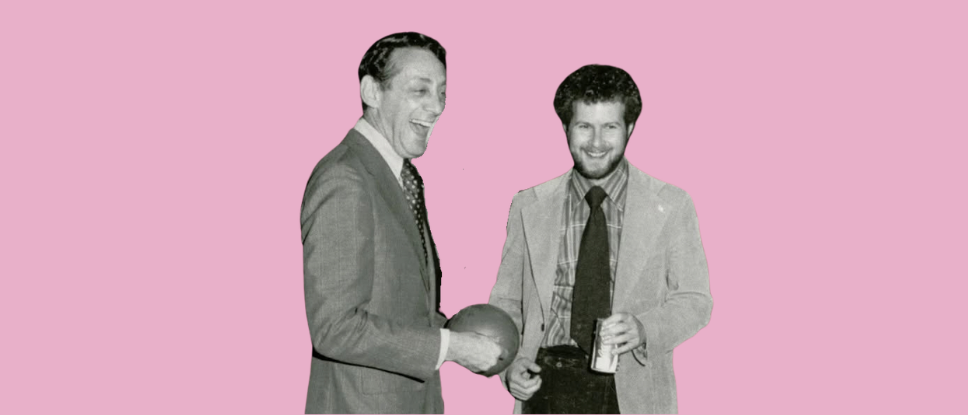
In this episode, we talk about the myth of Harvey Milk and the man who made it: the pioneering gay journalist Randy Shilts.
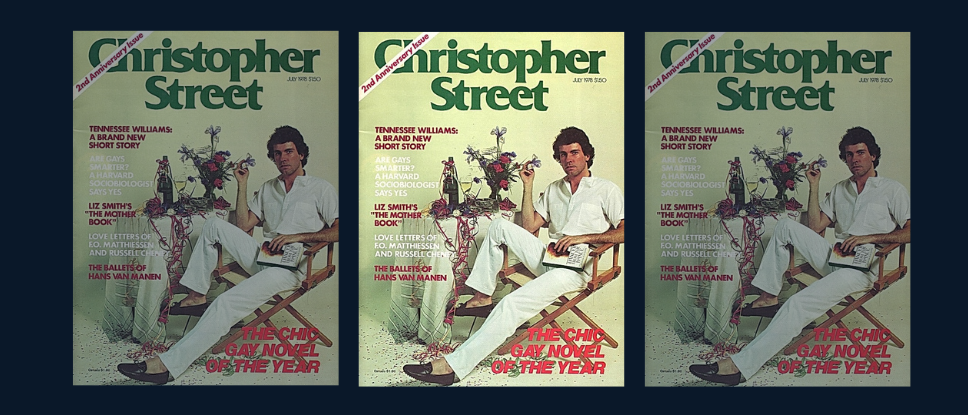
When Milk was assassinated in 1978, less than a year after he was elected San Francisco city supervisor, Randy Shilts transformed him into a gay martyr first in a cover story for Christopher Street and then in his 1982 biography, The Mayor of Castro Street. We consider Shilts as not just one of the most important gay journalists, but also as an underappreciated political thinker who saw Harvey Milk as an alternative to two different and equally unsatisfactory styles of gay politics that were on offer in the 1970s.
First, the insider track, represented by San Francisco gay elites who wanted to work behind the scenes with Democratic Party insiders for incremental political change. And second, to the gay left that envisioned gays as just one part of a radical coalition, with gay rights subordinate to overthrowing capitalism. In contrast to those options, Shilts showed how Milk had imagined the Castro as a sort of Main Street for gay America, an enclave that would be the basis of autonomous gay political muscle that could then be used to negotiate alliances on the basis of gay collective self-interest. By grounding his politics in the everyday problems of ordinary people, Milk also introduced a class basis to alliances between minority groups and labor unions, for example, that was often absent from gay civil rights politics.
Equally importantly, Milk rejected gay insiders’ hesitation about gay people being at the forefront of politics, offering himself as an unapologetic example to the rest of America that a flourishing gay life outside the closet was possible. And as a journalist himself, Shilts was very aware of the theatrical dimensions of Milk’s political style, and thought about how Milk’s skillful manipulation of the media could both catalyze local political power and connect local issues to a national struggle for gay rights.
So we talk about what we might learn from Milk and Shilts today about politics and the media, and we circle back to some of the questions we raised in our last episode about the state of gay media and what we could do if we had better versions of it than what we have today.
Listen now on Apple Podcasts, Spotify, Amazon Music, Pocket Casts, and many more platforms.
Sources
- Randy Shilts, “The Life and Death of Harvey Milk,” Christopher Street, March 1979.
- Randy Shilts, The Mayor of Castro Street (1982).
- Randy Shilts, And the Band Played On: Politics, People, and the AIDS Epidemic (1987).
- Randy Shilts, “Go EST Young Man,” New West, June 19, 1978. (Note: We incorrectly identified this in the episode as appearing in the gay magazine Blueboy).
- Randy Shilts, “Cleve Jones Rising,” Christopher Street, October 1980.
- CBS News, “Gay Power, Gay Politics,” April 26, 1980.
- Blake Smith, “Randy Shilts,” September 2024.
- Richard A. McKay, Patient Zero and the Making of the AIDS Epidemic (2017).
- Michael E. Lee, When the Band Played On: The Life of Randy Shilts, America’s Trailblazing Gay Journalist (2024).
- Manuel Castells, “Cultural Identity, Sexual Liberation, and Urban Structure: The Gay Community in San Francisco,” in The City and the Grassroots: A Cross-Cultural Theory of Urban Social Movements (1983).
- Jasbir Puar, “The Cost of Getting Better: Suicide, Sensation, Switchpoints,” GLQ (January 2012).
- Gus Van Sant, Milk (2008).
Latest from the Christopher Street archives
 James Tamulis
 Andrew Holleran