

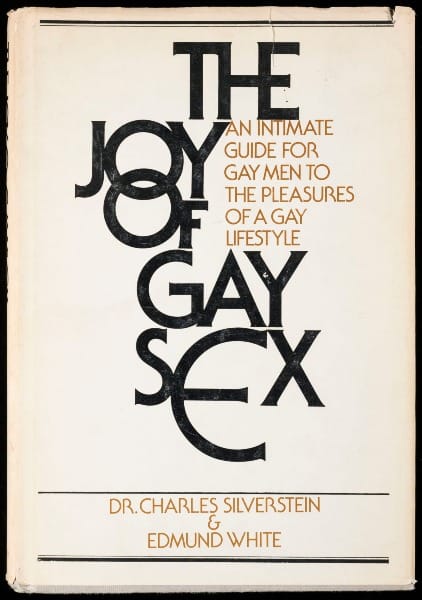
The introduction to Charles Silverstein and Edmund White's 1977 classic, The Joy of Gay Sex, is one of the clearest, most cogent texts of gay theory from the immediate post-Stonewall period. In just a few pages, the authors contextualize post-Stonewall homosexuality as a novel historical phenomenon, distinct from previous forms of homosexuality in that for the first time it posits sex and love between two equals, two adult men, as opposed to requiring hierarchies based on inequalities in class, age, or gender presentation, in which one partner plays a subordinate or 'feminine' role. Modern homosexuality breaks down the stereotype of 'the homosexual' and gives gay men access, for the first time, to the full range of roles, identities, and gender presentations. It also marks the advent of a historical period when gay men can, by inventing their own, specifically gay culture, also envisage integration into society rather than being permanently relegated to a transgressive, avant-garde position outside it.
MALE HOMOSEXUALITY AS IT IS TODAY is a brand-new phenomenon. Whereas many scholars have looked for historical continuity and assumed that homosexuality in the twentieth century is descended from classical Greek pederasty, say, the startling truth only now is becoming apparent: modern gay life has no antecedents. The gay life-style that has evolved in the last hundred years and acquired many of its distinctive features only in the last two decades would have made no sense at all to the homosexuals of the past—to Plato or Michelangelo or Marlowe or Monsieur, as Louis XIV’s homosexual brother was called.
To be sure, there have always been men who have had sex with other men. And there have always been stories of great and touching, even passionate friendships between members of the same sex. And there have even been in many societies and in different epochs men who have been willing to face public scorn in proclaiming their love for other males. Even so, none of these earlier homosexuals would have felt comfortable in our company, nor we in theirs.
To understand what has changed we need to look again at the homosexual relationships of the past and compare them to those of today. In Periclean Athens, one gathers, an older man might have had a sexual alliance with an adolescent boy without raising many eyebrows—but only if he observed certain conventions. First, an age difference almost always existed between the two lovers, at least if the testimony of literature is to be trusted. Secondly, the older man, to put it bluntly, did all the fucking. If a man with a beard wanted to be fucked, he became an object of satire as in the plays of Aristophanes or later, in Rome, in the verses of Juvenal or the prose of Petronius. Third, the relationship entailed definite responsibilities: the older man educated the youth and launched him into adulthood. Fourth, the relationship was in no way incompatible with heterosexuality. The older man might be married, and in fact usually was; the youth, upon attaining maturity, generally married as well. The relationship, which had been formed according to one social convention, was terminated by another; as a romantic and sexual involvement it ceased when the youth entered manhood.
This form of homosexuality, of course, was the ideal, and undoubtedly many people departed from it in practice. We know, however, very little about such exceptions, and those we do know about invariably stirred up public indignation. The love of the Roman emperor Hadrian for the beautiful youth Antinous (who conveniently died at the age of 20) was endlessly celebrated in art and literature, but the decision of the “corrupt” emperor Heliogabalus to dress as a woman and to marry a man was viewed by everyone with loathing and disgust.
If we contrast modern homosexuality with the homosexuality of other eras, we immediately encounter several unprecedented features, if not taken individually then at least when taken as a whole. Though there are pederasts today, they are by no means the rule; pederasty is, in fact, sufficiently rare and suspect as to invite the incomprehension and condemnation of most other homosexuals. Though in many gay relationships today one partner does the fucking and the other invariably gets fucked, this sort of role-playing, held to as a strict division, seems increasingly on the wane—again a phenomenon that most gay men would denounce as “old-fashioned” or “unliberated.” In a modern gay relationship, just as in the homosexual relationship of classical times, love entails responsibility, but with one important difference: the responsibility is shared, not one-sided. Although there are many gay married men today and many bisexual men, there is also a huge population of exclusively homosexual men; for them, who far outnumber the others, homosexuality excludes heterosexuality—again, a uniquely modern development. Finally, since a gay relationship today is not based on an age disparity, there is no moment when it must come to an end.
To simplify the difference, we might picture a 35-year-old Athenian in love with a 17-year-old ephebe whom he fucks and instructs in geometry and whom he will stop loving when the youth turns 20. By contrast, in New York we might picture a 35-year-old lawyer in love with a 35-year-old doctor; they take turns fucking each other, they share expenses and household duties and they will stay together forever (or so they hope).
But let’s contrast modern gay love with the homosexuality of the nineteenth century. In this pairing we have an example closer to hand, more familiar and yet strangely different. The nineteenth-century homosexual, at least the figure we know about, seems to have been either an aristocrat or a bohemian, that is, outside the mainstream of society. He was usually an exquisite, a dandy or at least an eccentric. We picture someone thin, wispy, lisping; even Oscar Wilde, an immense man who was a rugged athlete, shoe-horned himself into this unlikely stereotype. Seldom did the homosexual acknowledge his “perversion” to society at large; if he did, he was cast out of society, as Rimbaud and Verlaine were, or he was imprisoned, as Wilde was. Pederasty seems to have died out as the most approved model; indeed no model of homosexuality won societal approval of any sort. To be gay was to espouse “the love that dare not speak its name.” Wearing cloaks of secrecy, homosexuals loved men of all ages, but almost never lived with another man. They could not take that risk. In the deepest privacy of their homes, however, homosexuals often indulged their desire to act, talk and dress like women.
Today there are striking differences. Homosexuality is no longer primarily an aristocratic or bohemian phenomenon; there are gay men of every social and economic class who ply every conceivable trade. Though there are homosexual dandies and esthetes, or whatever the modern equivalents would be, they constitute a tiny minority. Modern gays pursue life-styles as varied as those of heterosexuals; there are openly gay surfers, athletes, bartenders, butchers, carpenters, therapists, ranchers and bankers.
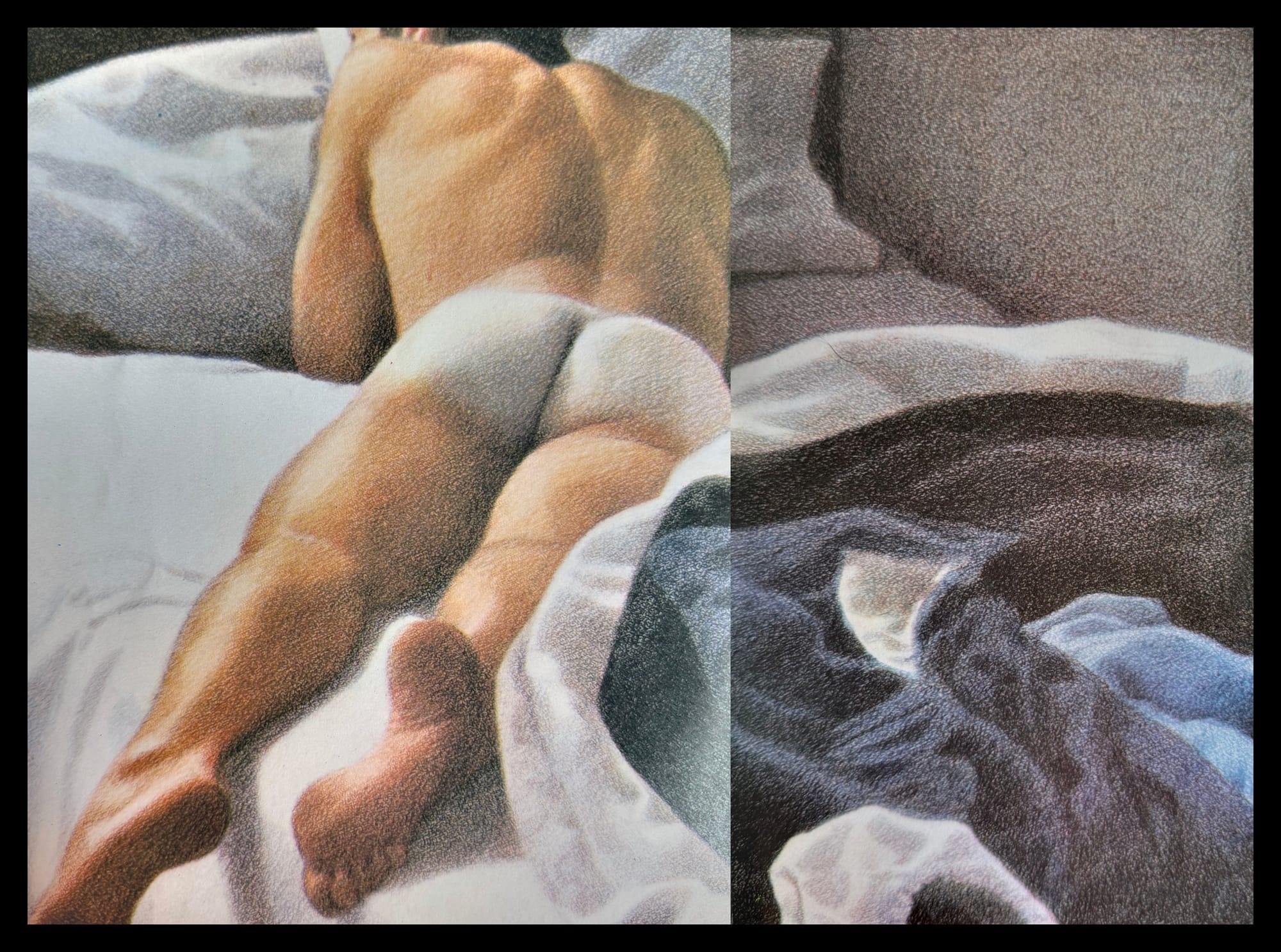
Although some gay men dress in drag and identify with women, they are again a minority, rejected (unfortunately) as cruelly by the majority of gays as by straights. Perhaps gay men today are more androgynous, by and large, than their straight counterparts, more willing to incorporate so-called “feminine” qualities into their personalities, but this greater flexibility (to the degree it exists) seems less a matter of identifying with women and more a result of gays having seen how arbitrary all social conventions are. Having defied those conventions by becoming gay, the modern homosexual is free to become the man he wants to be.
Most importantly, more and more modern homosexuals live quite openly. Perhaps they have not come out on the job, perhaps they have not yet disclosed their homosexuality to their parents, but they are indifferent to the frowns of their landlords when they move in with a lover and they gladly line up in front of a gay disco in full view of straight passers-by. And in fact a vast number of homosexuals today are coming out—to their straight friends, to their parents and (if the situation is favorable) to their employers. Moreover, gays are highly visible; they have become a “media event.” They speak on television, they run on mayoral tickets, they have taken over whole neighborhoods in big cities. As some straight cynics complain, the love that dared not speak its name now won’t shut up.
Gays today, then, are different. Their relationships to sexual partners are impossible to categorize or stereotype. Their self-presentation is equally difficult to pigeonhole; gays are “masculine” and “feminine,” artistic and philistine, serious and frivolous, warm and cold, sensitive and swinish. Michel Foucault has pointed out in Madness and Civilization that in every epoch there has been a different style of craziness suited to the spirit of the times. Similarly, we could say that in every epoch until now there has been a prevailing style of homosexuality, from the pederasty of classical times to the neo-Platonist idealism (and pederasty) of the Renaissance to the back-biting and woman-hating of Monsieur’s Versailles in the seventeenth century to the dandyism and effeminacy of the nineteenth. But today what is the normative type? Who is the representative homosexual? Could it be that homosexuals, no longer considering themselves mad, no longer need to conform to a single style of behavior? That unlike the homosexual courtiers of Henri III in the sixteenth century, we need no longer be “frisés, fraises, poudrés, parfumés” (curled, ruffed, powdered, scented)?
It’s still too soon to state definitively how modern homosexuality evolved, but we might hazard a few guesses. Among the possible causes, urbanization must surely figure in any list. For modern homosexuality is an urban phenomenon. Not that there aren’t gays in every small town, but only in the big cities have homosexuals been able to emerge from their closets, live openly with lovers, forge a political consciousness. If some homosexuals are now more visible in smaller communities, they are benefiting from the battles that have been won in Chicago, New York, Los Angeles, San Francisco. Cities have always been breeding grounds of “vice”—that is, any deviation from heterosexual marriage of the most conventional sort. In cities men have kept mistresses, artists have lived with their models, rakes have visited prostitutes—and gays have come out, gone public and made no secret of their preference.
The growth of cities, the breakdown of traditional religion, the advent of social and geographical mobility—all of these factors have drawn homosexual men away from the static world of the rural family and plunged them into the whirling anonymity of the city. In cities, separated from their parents by distances and experience, cut off from convention and repression, many people (not just gays) have experimented with their lives and liberated their desires.
But the most important factor in the gay revolution must be the emergence of a huge middle class. Before the nineteenth century the world was divided into the struggling poor, mostly farmers, and a very small ruling class; only the aristocrats had the time and the means to indulge their whims. But in the nineteenth century, and especially in the twentieth, vast numbers of urban, middle-class people were released from numbing poverty and existences of rigid morality. For this new middle class, the goal was no longer to survive, to obey and to provide but rather to prevail and to search after self-fulfillment.
Gays today represent this tendency toward hedonism in one of its most extreme forms. Gay men pursue careers because their jobs interest them, they travel, they can have large disposable incomes for records, cars, vacation houses; they can eat well, dress well, exercise their bodies, attend concerts and lectures, take up expensive hobbies—and they stay with a lover only so long as that relationship is emotionally and sexually satisfying. Naturally we’re overstating the case; countless exceptions exist to this simplified portrait, but the fact remains that, not burdened by the long-term responsibilities of raising families, most gay men are free to pursue pleasure rather than submit to duty.
Sex is one of life’s chief pleasures, and gay men have gained the reputation of being extraordinarily sexually active. Many homosexuals seldom or never settle down with lovers; an endless round of one-night stands or short affairs can provide a gay man in a big city with constant novelty and excitement and introduce him to a wide variety of erotic delights. And these delights can be deeply rewarding.
For many readers of this book, sexual pleasures exist largely or exclusively within the context of a single relationship. For them sex is best when it is joined to trust, intimacy and shared affection and experience. Many of the entries in this book are addressed to lovers, and virtually all of the remarks should be of some interest to anyone who is gay.
But a book about gay sex that ignored tricking would be missing a large part of its audience. Unfortunately, many homosexual men feel bad about their own promiscuity. No one stops to ask what is inherently preferable about having one lover rather than many tricks. Undeniably lovers have a chance to learn each other’s tastes and the joys of mutuality. But against these domestic pleasures can be juxtaposed those of the one-night (or one-hour) stand.
Sexual tastes, of course, are inarguable. Nevertheless, a word should be said in praise of gay sex, whether it be between lovers or strangers. The chief reason to mention these pleasures is that they are so seldom described, even by the men who know them best and relish them most. The imaginative literature produced by homosexuals still hovers in the gloomy shadow of Freud and other spoilsports, and all too many of the “serious” gay novels read as though written half by Kraft-Ebbing and half by Cotton Mather. The less pathological rewards of lust remain to be properly celebrated.
The most obvious reward derives from the fact that one man knows fully the body of another man. If you and your partner are sixty-nining, for instance, chances are you have a good notion as to what he’s feeling. Another pleasure is the complete reversability of roles. As a gay man you have the chance to yield yourself to another man and glory in his strength, just as you have the reciprocal opportunity to cover, surround or protect him. You can be the Man or the Boy (regardless of your real ages), Batman or Robin, and you can jump from one to the other in the space of seconds. This behavioral and psychological flexibility is one of the least lauded but most laudable aspects of homosexuality, not just because it might be “healthy” (too often a code-word for “good”) but also because it is fun, rich provender for the maw of the imagination. At least within the precincts of this book, cast aside all worries about why you like to have sex in one way rather than another and concentrate on pinpointing exactly what you like and how to get it.
But it is this very hedonism of gay life that piques the rage and jealousy of some straight bigots. Gay men are accused of being “irresponsible,” “selfish,” “sex-crazy,” “unstable,” and all these epithets are voiced primarily by straights who have submitted to lives of self-sacrifice. The real target of their anger, however, is not gay life as such but rather single life. Straight singles are not as obvious a target, since theoretically every straight single man or woman might marry someday. Gay singles, by contrast, have elected not to have families. They pose, therefore, a serious threat to the institution of marriage, which is already fairly well battered.
When people still lived on farms, children were not an economic drain but rather an economic necessity. They were needed as field-hands, just as a wife was needed to perform domestic chores (to cook, make clothes, keep a vegetable garden and so on). In the city, however, marriage is no longer an economic benefit. Quite the reverse. Worse, parents haven’t even the pleasure of commanding their children’s respect. As science, politics, social customs change at a dizzying pace, parents find they can no longer do their children’s homework—and the children regard adults as hopeless old fogeys.
When some straights strike out against gays they invoke the sanctity of the family and the tenets of traditional religion. They state that they do not object to gay teachers—so long as they remain in the closet. What they fear is homosexual visibility.
Now surely few heterosexuals can seriously believe that homosexuality is so intrinsically alluring, so blatantly superior to heterosexuality that once a boy is exposed to gay life he will instantly convert to it. But what the homophobes may be fearing, in their confused way, is the image of a footloose single life. We would argue that gays are simply bearing the brunt of a much larger conflict of duty versus hedonism, marriage versus the single life—that gays are caught in a major upheaval in society.
What envious or indignant straights do not realize is how complicated gay life can be. Precisely because modern homosexuality is new, it is riddled with insecurities. Precisely because gays live outside ordinary society, they must deal with feelings of guilt—and with their anger at constant societal disapproval and discrimination. We are not just carefree bachelors jetting off to Capri for holidays; we are also ordinary human beings who have suffered from bigotry, from self-hate and from the anxiety of entering uncharted waters.
Gays are fighting bigotry by taking political action; they are combating self-hatred by coming out, by manifesting gay pride, by marching, by demonstrating, by insisting on their rights, by building gay solidarity. This struggle must be fought over and over again, for no one is brought up gay. Each of us becomes homosexual in a heterosexual society. The uncharted waters of gay relationships are an exciting frontier. Only now are gay men beginning to work out, through trial and error, relationships that are adequate to their real needs. In the past gay men tried to imitate straight marriage, with its vows of fidelity, its role-playing, its power struggles. Certainly marriage still exerts a compelling spell over many gay men; it is the model that every movie and pop song romanticizes, and its very familiarity makes it seem authentic. But a new breed of gay men is attempting to revise old contracts between lovers. In this book we look at some of these revisions under such entries as Jealousy, Envy and possessiveness, Lovers, Role-playing and Androgyny.
Since heterosexual society itself seems to be undergoing an uneasy transition between traditional marriage and more open and varied forms of relationship, homosexuals may be exploring ground that soon everyone will be crossing. Artists used to be called “the antennae of the race.” Perhaps in this latest migration into new terrain gays will serve that function.
The Joy of Gay Sex is by gays, for gays, about the gay subculture that comes equipped with its own rituals, its own agonies and ecstasies, its own argot. Therefore, in this book the authors in the main speak to gays in their own language, using occasionally words and terms not accepted everywhere but natural to gays.
The book tells us how to get the maximum enjoyment of sex and therefore a better enjoyment of life and a relaxed feeling of well-being. It also tells how to avoid mistakes, anxiety, depression, frustration and risks.
We would hope that this will be a guide, philosopher and friend to gays, as well as a practical sex manual.
We have called it The Joy of Gay Sex for three reasons: one, the best sex is joyful—rich, rewarding, deeply satisfying; two, so many men have hangups about their homosexuality that they miss out on the joy which is there for the taking—this book is, we hope, an expression of the joy that can be; three, it has this title partly despite and partly because of The Joy of Sex, the straight sex/life-style manual that already exists. We do not seek to imply in any way that the authors or editor of The Joy of Sex see sexual enjoyment the way we do, or indeed that they give their blessing to our book, but The Joy of Sex sorted out a lot of sexual knots for a lot of people: we hope that ours may do so too; it also confirmed a lot of fairly liberated straights in the knowledge that what they were doing and knew privately was right was right. It is our hope that The Joy of Gay Sex may do the same for gay men. Homosexuality is, after all, simply one more set of variations along a vast continuum of individual difference. ❡