

This article appeared in the November 1982 issue of Christopher Street.
IT'S A MANHATTAN BELIEF that you shouldn’t have friends in your building because they’ll be forever dropping in asking for money, liquor, trouble, and so on. Baby Tishri, in 81, drops in for stories about how I get thrown out of parties. He thrills to them; he manages to be simultaneously scandalized and proud to know me. Violence in the streets he deplores—violence among the literati stimulates him. He begged me to set up a dinner taking in leaders of rival factions in the gay cultura nostra. Yet when the fireworks went off, Baby Tishri cried, “The savage is loose!” and locked himself in the bathroom.
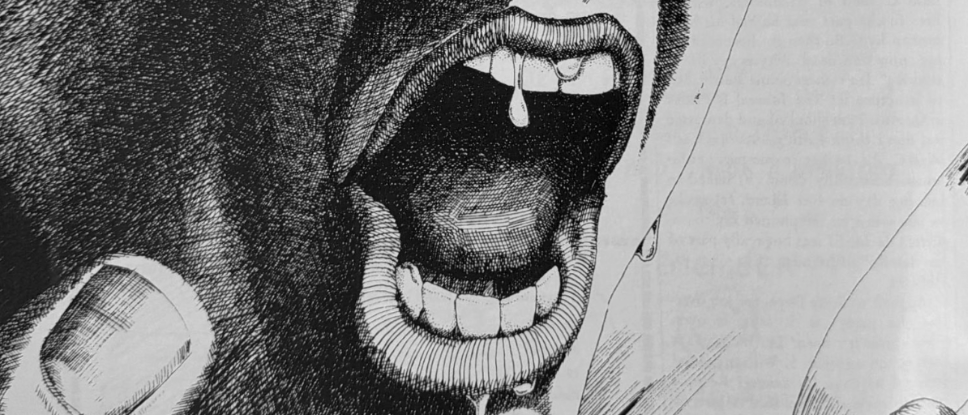
Violence scares even its devotees.
It’s a scary city, Manhattan, the only one in which solid citizens in vested suits pass you carrying on loud arguments with themselves. What’s in the air? I wonder what I look like walking. Once a friend told me she had seen me going somewhere, but hadn’t said hello because . . . well . . .
“What? Because what?”
“You looked like you were having a very intense lunch hour.”
Was I arguing with myself out loud? We rehearse scenes we didn’t play right, tell off an oafish clerk, condemn a friend to horrendous but merited death. Baby Tishri says, “There is only one argument, and it’s you against your father.” This is mere chic. There are at least eight arguments: (1) with your editor concerning the closing paragraph of your book, (2) with your best friend’s lover, because he’s a tiny fool, (3) with your editor concerning the design for the dust jacket, (4) with your upstairs neighbor, the day you played “The Parade of the Wooden Soldiers” time without number, (5) with your editor concerning whether the photograph you want on the back flap is in, um, acceptable taste, (6) with Baby Tishri over his visiting with grotesques who scan your pantry and make stupid jokes about the cumin (e.g., “Oh, don’t you just lubbbve the cumin?”), (7) yes, with your father, on almost any pretext, and, of course, (8) the political argument. Political arguments are how I usually get thrown out of parties.
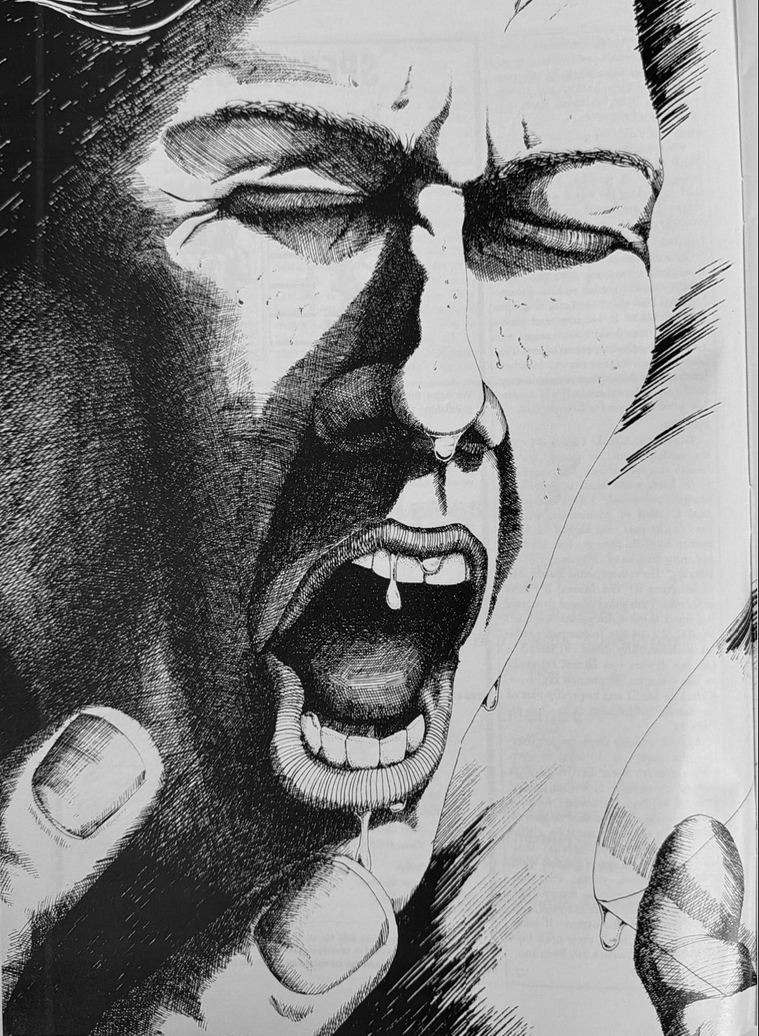
I maintain that politics is mortality and survival, so a political foe’s a creep and the enemy. Smash him. There is no possibility of stimulating debate in politics; anyway, everyone’s head is set. If you’re a liberal, the conservatives do snide things with their noses and put you down with quotations from Edmund Burke. If you’re conservative, the liberals scream, “Chile! Chile!”
“You’re always fighting,” Baby Tishri observes.
“I’m always provoked.”
“Or don’t you announce your eagerness to be provoked? You signal the feisty cognoscente.”
“How?”
“The way you stand, the way you hold a drink, the way you tone.”
“That’s in a verb.”
“And why do you always wear dark glasses?”
“What’s it to you?” I snarl.
“See?”
I think of ordering somewhere a button reading “Defoliate Baby Tishri” as he prepares his theory. “The circuit,” he finally declares, “consists of choices. Whom to go with? What to wear? Shall we be frank about ourselves or reinvent?”
“Reinvent.”
“Hush, the divo speaks,” he tells me. “You’re always fighting because you make choices by passion. Instead, you should choose by whim. You should consult Chatty Cock.”
“Who?”
“The Spirit of the Circuit. Chatty Cock has the right instincts. He knows whom to go with, what to wear, whether to prevaricate or denude himself—”
“I’ll just bet he does.”
“—because he has no ethics. He lives for life.”
One button isn’t enough. I’ll order a crate, sell them, and clean up.
“You think too much,” he goes on. “Consult Chatty Cock. Take the moment. Let it happen.”
“I’ve heard that somewhere.”
“In an emergency, you might wish to assume a refreshing posture of comic resistance, reducing the circuit to a vanity.” Baby Tishri doesn’t merely theorize; he dictates a proposal to Yale University Press. “In that case, you might consult Satyricock.” I heard him pronounce the “y,” I swear. “Satyricock doesn’t get much, but he’s popular and is never thrown out of parties.”
“I visualize President Taft.”
“He’s nothing to look at, true. But he has balance. He’ll never figure in disreputable dish.”
“All right,” I tell him. “What if you don’t believe in comic resistance? What if you take everything seriously and deal with each issue as it arises, to commend the good and outmaneuver the evil?”
“Then you’re in the grip of Murder Cock, and no good can come of it.”
“Murder Cock? He sounds like the boy to follow.”
Baby Tishri shakes his head. “That’s a no-win voyage. See, with Chatty Cock, everything is casual narcissism: do I want to or don’t I? With Satyricock, everything is burlesque. Note the choices?”
“And with Murder Cock?”
“With Murder Cock, everything is resistance and counterattack, death and debris. Follow him and you’ll fight forever. Word will get around and no one will take you seriously.”
On the other hand, violence often seems the only thing gays do take seriously. Recommended gay costume draws an impression of proletarian menace, gay physique favors industrial strength, and the gay love dream sees one being thrown around the room by Clint Walker.
Yet Baby Tishri has a point. He obviously consults Chatty Cock night and day, and stands quite high on many guest lists. I’ve known people to cancel parties if Baby Tishri wasn’t available. His associates bombard him with gifts; they spend Sunday afternoon gamboling through the stores, looking for “something kicky for Baby Tishri.” Let someone call me with a dinner invitation, “and everyone’s bringing something”; let me reply, “What is this, a dinner or a picnic?” and I get a horrified silence. The caller thinks, “I’ve heard the tales, and here’s the proof. He’s vicious, and quite, quite mad.” But let Baby Tishri say the same thing—and the caller apologizes all over himself. Nay, Baby Tishri, you just bring yourself, you darling boy!
He does well sexually, too; perhaps he is Chatty Cock—or no, he has improved on the model: life lives for Baby Tishri. He doesn’t even have to make his choices. They float about him and blow him along like a star figure on a parade float. I can hear the crowd cheering. We’ve gone in due to parties, he and I, to watch each other’s style, and he clearly hopes I’ll do something rash and get thrown out. He points out likely adversaries, feeds me reasons, nags when I concentrate on the buffet and eat quietly in a corner instead of swaggering through the room heaving drinks in people’s faces.
“Look at that one,” he carols, remarking a stately blimp holding forth to a bevy. “He’s saying terrible things about Stephen Sondheim.”
“Then let Stephen Sondheim throw a drink in his face.”
“Now I see an elegant type in a cape, making gestures of a politically questionable nature.” See how he goads me? And he’s grinning, the villain. “Please go over and reason with him. Take your drink. Wait, I’ll get you a fresh!”
I’ve news for Baby Tishri: I fight my battles only. But it is true that I once threw a drink in someone’s face. Two drinks: his, then mine. The gentlemanly thing is to say I don’t even recall what the quarrel was about and I blush for my part in it; but in fact I remember the whole thing and I’d do it again precisely as before if I had the same provocation today. The controversy centered on whether anyone has the right to rise up and abuse me for something I’ve written, as if I were some sort of egalitarian apparatus made to please all of the people all of the time. Mind you, I’m not speaking of a reader questioning something—I’m talking dead-on, calculated, bloody fucking rudeness. I had, in a book, given short shrift to Gian Carlo Menotti, and a Menotti connoisseur (if that’s not an oxymoron; and he was) came up to me at another of these huge, gala parties and started—as we used to put it on the opera line—laying me out to filth.
“The simple purchase of a book,” I informed him, “does not entitle the reader to disputations with the author.”
“You think I bought that slop?” he screamed.
“Well, but you look like slop,” I said, hoping to distract him with a fresh line of discourse. “You seem to be a pail of month-old custard.”
He was not to be deterred. “I think you’re the worst writer in New York!”
“Who cares what you think?”
It wasn’t the wittiest volley I’ve ever stood to, but I was younger then, headstrong, fumbling my choices. Nowadays, aged and serene, I have developed a suave method of neutralizing these commotions. I let my opponent rave. I say nothing. I register no expression—easy to manage in dark glasses. I let him run down. A wicked silence follows. Then I turn to some cohort and inaugurate a wholly new topic of conversation, and my opponent looks like the jerk he is.
A few years ago, however, I was more fire than ice, and I’d defend myself. Not with expostulation—you never win that way. On “Who cares what you think?” I calmly hit upward on the sole of the Menotti queen’s glass with my fist, splattering him with liquor and ice. Then I threw the contents of my drink in his face. What happens then, aha? Nothing. No one yells. No one whines. Most of the assembly doesn’t even know anything happened. That’s why there’s so little dish on the subject. But in this case the bystanders reacted alertly, as if my reputation had preceded me and a plan ordered; they piled around me, grabbing hold and trying to edge me to the door. If I were to write a handbook on Getting Thrown out of Parties, I’d say Rule One is: always leave on your own energy. It’s allowable—it is sometimes preferable—to be asked to leave. But no one looks good getting ejected. If a mob should engage you, fight them off with a ferocity that suggests you would gladly kill them if you didn’t have prior engagements. Rule Two is: almost every man you will meet at a party in Manhattan is a coward. Anyway, I threw off my assailants, tipped an ironic, imaginary hat to the public (luckily it was spring—imagine having to find your coat after all this), and ambled out.
“Murder Cock strikes again,” said Baby Tishri when I told him the tale. Yet he enthused. Then he pouted: “You never do that for me.”
“I’m not your goon.”
I fight my battles, I say. Baby Tishri alleges that I time my incidents to deny him witness, but they come when they come. My greatest endeavor, the climax of my career, was at a smallish party with an arts-and-leisure accent at a lavish East Side spread. I was there as a friend of the host’s best friend, a stalwart and at times dazzling fellow whose recommendation carries a tepokay rating from Yorkville to Kip’s Bay. I imagined that his associates would be more or less of his ilk, with a few dowagers and beaux here and there, as at a Debut. But as soon as I stepped into the room I felt that clammy agitation of humiliated sensuality, convictions of injured merit, and implacable paranoia, the violence of the Manhattan divans. I should have run for it.
But here was my stalwart friend come forward to deliver his famous strapping handshake, and I was moving among them, meeting and chatting. The combined efforts of Max Reinhardt, Gordon Craig, and Robert Edmond Jones couldn’t have set the scene more efficiently in the dead center of Attitude; there was even someone at the piano playing fiendishly difficult Brahms with absurd ease. Freudians will tell me that I was subconsciously looking for an incident to articulate my distaste for who knows what. On the contrary, I was hoping to impress my friend, for our relationship was then just at the tender verge separating acquaintance from intimacy. I needed to make good.
So it was that when some character began to tell me, with sure enthusiasm, that the millennium was nigh, that the Mother Soviet was calling in her debts, and that the corrupt West would soon fall, I quietly consulted Chatty Cock, who advised me to excuse myself and find someone scintillating. I moved away, but he followed me, still talking. The world, he exulted, was about to become one great Gulag, and history would be officially over. Now I consulted Satyricock, who suggested I lead him on with Buckleyesque spoof. But I cannot turn that kind of fun on at will. Like Mime after Siegfried has tasted the dragon’s blood, I could only say what I mean. And when the commissar told me that the new age would dawn with the total destruction of America’s surrogate, Israel—I bet you think I’m making this up—I consulted Murder Cock, and he told me to kick the creep in the balls.
And I did.
The strangest thing about what followed is that at first nobody got mad at me for my fiasco in politeness. They fretted over their fallen comrade, carried him into the bedroom, laughed nervously. But generally they appeared to accept what had happened as a concomitant of this our gay life in the Hauptkulturstadt—till one of them asked me what happened, and I what then how they stared, and in what contempt and horror. They backed away; I think I saw one of them shiver. Well, I know an exit cue when I get one. But, oh, my stalwart friend was something to see. He was . . . utterly mystified. I might have been speaking in Braille. He started to come over to me, but I held up the flat of my hand and said, “I’ll call you tomorrow.”
That group was not about to let me have the last word, however. As I neared the door, someone announced, “Look at him! He shows no remorse whatsoever!”
This is Baby Tishri’s favorite story. He’s heard it so often that if I’m not in the narrative trim and leave out some detail, he’ll stop me and fill it in himself. Sometimes he wants new information: “Tell how they were dressed” or “What was the view like?” Once he brought his sidekick Little Kiwi (of whom he is fiercely possessive) especially to hear it, and when I had finished, Baby Tishri said, “That is the true Manhattan.”
Oddly, for someone so analytical, Baby Tishri has never asked for the most enticing piece of information: what did my stalwart friend say when I called him? Well, I never did call him because by noon the next day I had come to realize that they will forgive you anything in Manhattan except violence. And, being discreet as well as stalwart, my friend didn’t call me when I didn’t call him. And so we left it.
About nine months later I saw him, smashing in his overcoat, heading straight toward me on a ferociously cold and snowblown Saturday afternoon. We were both laughing when we reached each other, and he said, as he treated me to that stupendous handshake that has passed into legend on Sutton Place, “That was my last laugh, because I just lost my gloves and it’s the end of the world.”
It looked like it: we were the only people in sight. The ice caps were expanding, glaciers had advanced as far as Darien, and the population had been evacuated. Only a few stragglers were left; the smart set would not abandon its turf. Breathlessly, I ran through news and gossip, fearful that we would turn solemn in a lull, or that he would speak of the party. I was moving fast. I began to blurt things, allusions to taboo material that I myself didn’t catch till I had uttered them. Some people lose gloves; some lose friends. Who said that? I tried to slow down and catch up the reins, but there are times when the things that must absolutely not be said are the things you have to say.
So it was I who brought up the party in the end. I ran through it with tactless exactness, as if I had only heard tell of it and were rehearsing a column, recounting the doings of strangers. The city is ice, sheer ice. I thought of a debonair smile and flashed it as I said, in conclusion, “He still feels no remorse whatsoever.” I gulped as I said it. And my friend reached out a large hand and stroked my hair. ❡
Ethan Mordden is a novelist and historian of musical theater. Parts of his "Buddies" novels, including I Have a Feeling We're Not in Kansas Anymore (1985), were first serialized in Christopher Street. [Ethan Mordden on Wikipedia]