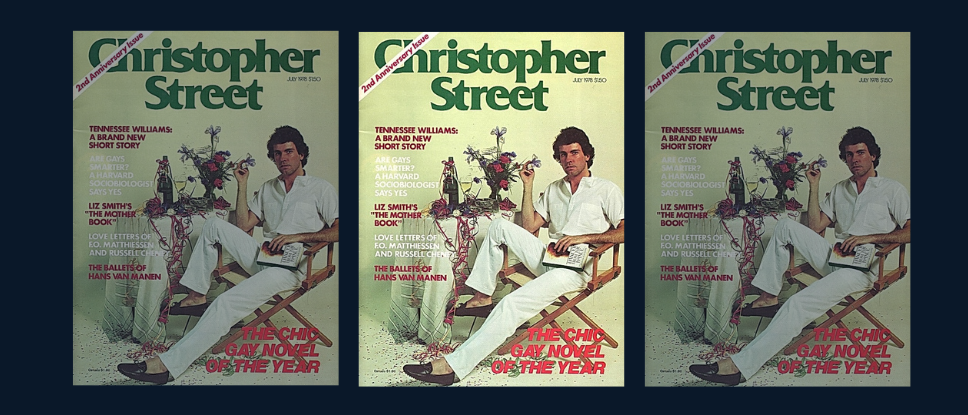
This article appeared in the December 1982 issue of Christopher Street.
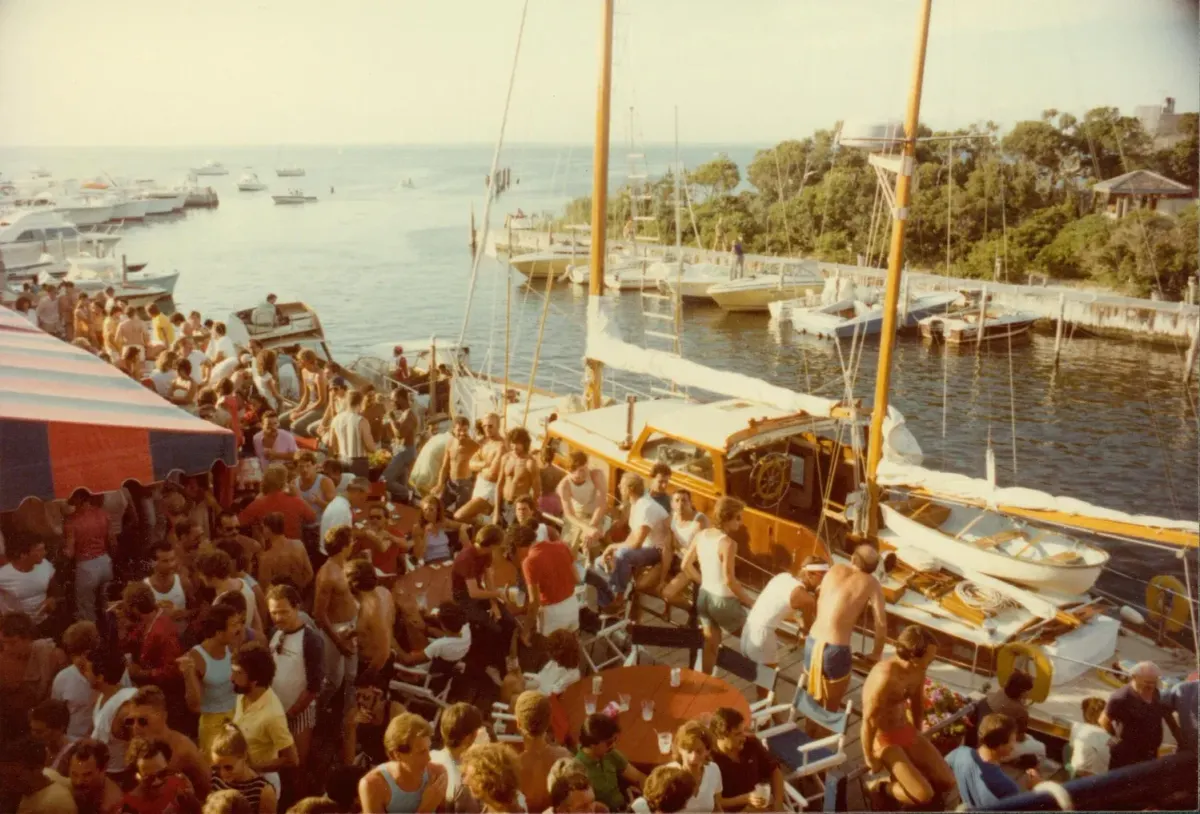
THE NUMBER OF YEARS I considered going out to dance in New York a waste of time is hard to pin down: I want to say five, but it may in fact be more like seven or eight. It stretches back to the closing of the Tenth Floor (whose neighborhood now contains Danceteria, like the second bookend enclosing an era) and the winter of uncertainty which followed. That year people went downtown to a place called Butternut Bottoms, I believe, a club I never made it to and a name I may have confused with that of a ski resort in the Berkshires. When Flamingo opened we were presented with a quantum leap—it was the Tenth Floor multiplied by ten. I began to sulk that fall. The place was, I thought, too crowded, too stylish, and too expensive. (Now people look back at it as one of the intimate and smaller-scaled places.) I resented the official quality of the place, the buses to Fire Island on closing night, the Black Party, the White Party. But I was surely the only person in New York who did. My friends went every Saturday.
There was one problem even they acknowledged, however, and that was the music. One night at Flamingo, I stopped in the middle of the floor and thought: Music this bad can’t be an accident. These records had to have been selected, because every one of them stinks in exactly the same way!
Perhaps there was too much pressure on the discaires, but something happened when Disco became an industry. Was it the requirement that they play music no one had heard anywhere else? Or just the size of the crowd? Whatever the cause, for the first time I knew I was taking a chance when I went out blowing eight dollars on nothing. The visual aspects of Flamingo and its social electricity were always there—but I wanted to obliterate myself in hot, continuous dancing. And at Flamingo I usually left the floor after a few good songs, and then listened patiently for the next one, as still as a fisherman waiting for a tug on his line.
The more I went to Flamingo the more I thought: The one thing dancing shouldn’t be is a Big Deal. It was very important, yes, but it couldn’t be treated that way. Like love or friendship or sex, it had to be handled tenderly and without pomposity. Yet what happened with the rise of Disco as an industry was that it became a Big Deal: bigger and bigger. Perhaps because I remembered small places (the Loft, the Tenth Floor), I imagined dancing was mine, somehow, and a few hundred other people’s. How silly an idea that was! I found myself keeping my own disco, like Flamingo, to myself—no one else was complaining as the cavalcade of new discotheques, each one larger, each one more clever, began. Every time another opened I thought: Surely this is the last. The market isn’t that big. It can’t support another one. It was and it did. Twelve West opened after Flamingo, and then Les Mouches and Roxy. I went to Roxy on opening night, saw Brooke Shields, but didn’t put on roller skates. That people did put on roller skates to dance seemed to me exactly the proof, if any was needed, of how silly disco had become.
Then Bond’s opened off Times Square: Bond’s was the climax of Mega-Disco. Bond’s was as big as an airplane hangar; the dance floor reminded me of the deck of an aircraft carrier. One night we stopped in the middle of a song there—to watch the Dancing Fountains spurt up in time to the music. The dancers were all looking at the synchronized jets of water. They weren’t looking at each other. Bond’s was too much even for those to whom I no longer revealed my misgivings about Disco; few of them went back except to the Thierry Mugler fashion show. I was amused to hear a few months later that the fire department had to pull the plug on the music one night because the dancers thought the smoke filling the floor was artificial fog. It wasn’t—it was real fog.
Artificial fog, laser beams, advanced sound systems, neon decor, dee-jay booths that resembled the towers of air-traffic controllers: who cared? At the height of Disco the mailbox was stuffed with invitations to parties, or new clubs, every morning. But my heart wasn’t in it. It all reminded me of those steak dinners my father used to buy me even when I hadn’t any appetite: lavishness that made me dig in my heels. It was wrong—dancing had nothing to do with laser beams. It had to do with music, for starters. The odd thing was I heard the music I wanted not in discotheques but in greeting card stores, or at the baths. Late at night at Man’s Country the music was marvelous—why wouldn’t they play it when you went to the clubs? The more crowded my mailbox was with invitations to dance, the more disinclined I was to go out. I confined myself to dancing in the check-out line at the grocery on Ninth Street when an occasional song on KTU made me linger to hear it through.
By this time there were discotheques across America: I danced in San Francisco—I went to parties at the Galleria (a space even more airy than Bond’s) and the I Beam—without success. “You can’t dance in San Francisco,” a friend said. “There’s no neurotic energy there. They’re not under stress, they’re not worried about career pressures, and they get laid.” Whatever the reason, dancing in San Francisco was like dancing at Bond’s: the invisible dark walls compressing you into a knot of desperate dancers weren’t there. In Gainesville, Florida, I walked into the Spectrum and found, to my horror, a disco as deluxe and so sophisticated as any in New York: a sunken dance floor surrounded by a chrome railing, flickering lights, the majestic dee-jay booth, the same plastic culture. It was a perfect irony to drive home from Gainesville to the little town in which my parents lived and find at a remote crossroads, between a live oak and a gas station, a small shack with a sign that read: “A.B. DISC. Happy Hour 5:30, Drinks Fifty Cents.”
And when I came back to New York, dancing was dispersed among many places, and places so large, expensive, and repetitive, I concluded the golden age was behind us now. Thank goodness for the Cockring! This little bar at the end of Christopher Street, whose patrons exuded that joy that was missing for me everywhere else, was closer to my ideal than any other place. And when a friend (whose weariness with dancing was just beginning) complained that you never saw anyone from the A-list at the Cockring, I said the A-list wasn’t dancing any more.
Part of all their disenchantment was simply middle age: the crowd at the Tenth Floor (three hundred?) was by now tired even of Flamingo (with three thousand?), and no longer went out to boogie. Nevertheless, the Ice Palace opened on Fifty-Seventh Street, the Underground on Union Square, the Electric Circus on Fifth Avenue, Xenon not far from Studio 54. And the Sandpiper was renovated and turned into the Pavilion: a sound-proof room which satisfied the demands of the residents of the nearby co-ops, and left the dancers with the odd feeling they were still in Soho.
I myself refused to trek down to the Ice Palace in Cherry Grove at two on Sunday morning; that was when I wanted to be in bed. There was nothing remotely romantic to me in the idea of staying up all night. I wanted to enjoy Sunday. And once I decided that I would no longer inhabit the zone of night in which dancing took place, I was a mere alumnus of the scene. My complaint (overadmissible among my friends) that dancing started too late, was too crowded, too expensive, and too routine was part of the larger malaise of growing older. One by one I watched the best of them let Saturday nights go by without—as one of them archly put it—“pointing patent to the parquet.”
Then, as if to illustrate that law which says an organization builds its temple precisely when it has ceased to compel the hearts of men, the culmination of the aesthetic which began with the Tenth Floor was constructed around the block from me. Whenever I walked past the old Fillmore East on Second Avenue that summer (as ironic a site for a discotheque as existed) I peeked in to see what the workmen were concocting. The final result was something to be proud of as a New Yorker, but for many reasons the Saint failed to bring my friends out again. Several went to see the special effects, the stars on the ceiling, but when I asked one how he liked the opening night, he said, “I got a stiff neck.” The Saint was surely the best of the Mega-Discos: everything was done superbly, but to no avail. No matter how clever the lighting, no matter how efficient the coat-check, a crowd that size left one feeling void. The Saint was like a lover whose technique was perfect. My roommate bought a membership each year and never used it. He kept it for guests from out of town. And when I asked friends to go with me they declined. Now they were the disenchanted and I was the one who went out. Perhaps they knew an era was ending. At the Cockring, when the discaire played New Wave music, it cleared the floors as quickly as a giant fart. Everyone walked off except two young men bouncing up and down like pogo sticks or people in the throes of electric shock treatment. This was the last straw: each modern dancer needed so much space! It was so self-conscious, so dumb, this dancing. At Danceteria my nose was nearly broken by a blond woman doing what she must have thought was Jean-Seberg-drunk-in-a-Paris-bistro; gag me with a spoon. At Danceteria I wasn’t even sure men could dance together. At the Ritz I was sure they couldn’t. The men spinning women at the Ritz reminded me of days I don’t much want to remember: jitter-bugging in high school longer than anyone else because I had no desire to get my girlfriend off the dance floor to neck in the moonlight. I stopped dancing altogether—I stopped going anywhere. On Saturday evening I went downstairs to buy a newspaper or the pint of ice cream to which I’d narrowed down the field of oral satisfaction, and passed a long line of men waiting to enter the Saint. I thought perhaps I would recognize a friend. I leaned against a car some evenings to wait for a familiar face. What flabbergasted me was there wasn’t one. This endless stream of men all looked like people I knew but weren’t. They were all strangers. And then I went down the next morning to buy milk or a newspaper, I saw them once again, trooping up the sidewalk or hailing cabs, paler, haggard, handling as best they could the grim reality of Second Avenue after the Saint. The pleasures of the Saint always struck me as something of a hollow calorie: that is, they ended abruptly the moment I was on the street, as if they had never occurred. These men hailing cabs with earnest expressions were, some of them, veterans of a decade in which we had gone from the Tenth Floor to Danceteria—from Jimi Hendrix to Gloria Gaynor to Yazoo. We had seen Disco as an underground, unnamed thing; a troglodyte that eventually died, and an experience that still endured because it answered a need we had not lost. My absence was due in part to the adjustment to middle age, and when that was complete, and the music seemed to be getting good again, I went to a party and met a dance maven. He told me about the clubs I hadn’t gone to during my retreat—Baker, the Mudd Club, the Red Parrot—and I realized just how out of it I’d been, and, at the same time, how splintered the dance scene still was among many places with short lives. Where was the single divine place? What I wanted was a club you could go to on a Sunday afternoon, say; a discaire who played great music in sets which began slowly, got faster, then dropped down again; good-natured men; a room that was not too large; no attitude, just immaterial happiness that the best places had. “It just opened,” he said, “on Eighth Avenue.” Ah New York! I went there that Sunday. It was what I’d missed for seven years—the sort of place, I had to admit, made possible only by the fact that nearly everyone had been up all night. It was an after-hours club. Disco was underground again, just where it belonged, somewhere between the blues and exhaustion, sleaze and happiness. When I came out it was five o’clock in the afternoon and it was snowing and I was—little Gloria—happy at last. ❡
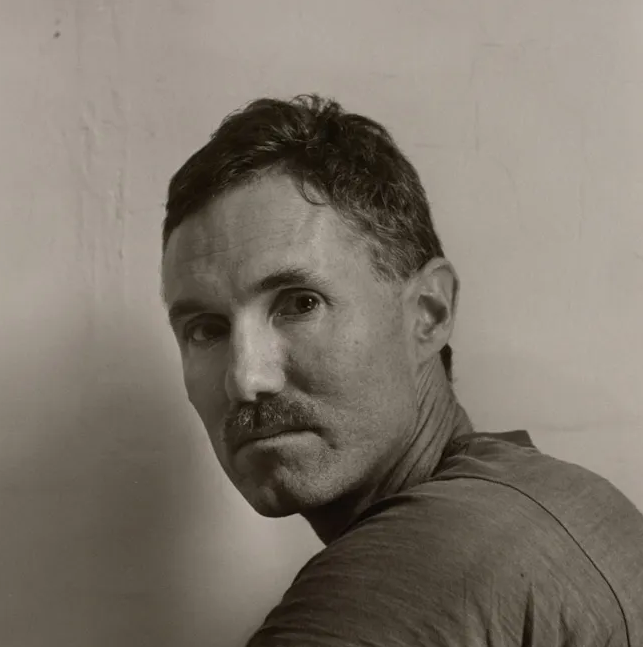
Andrew Holleran is the author of the celebrated novel Dancer from the Dance (1978) and, most recently, The Kingdom of Sand (2022). He wrote a regular column for Christopher Street from the late 1970s through the early 1990s. [Andrew Holleran on Wikipedia]