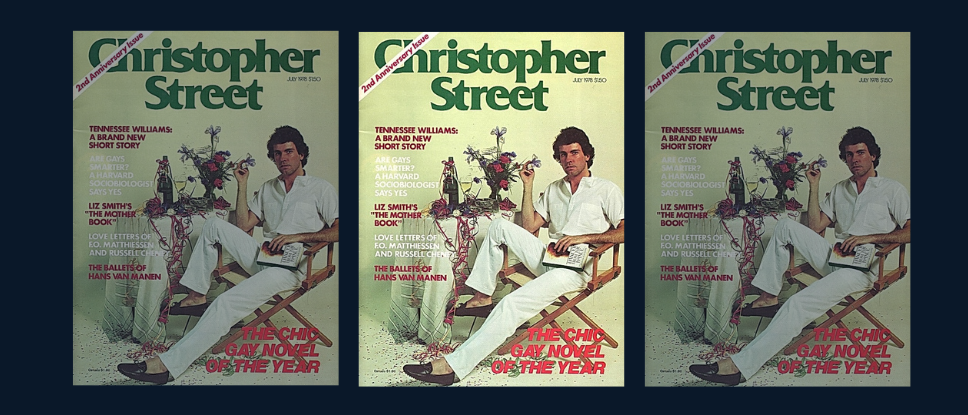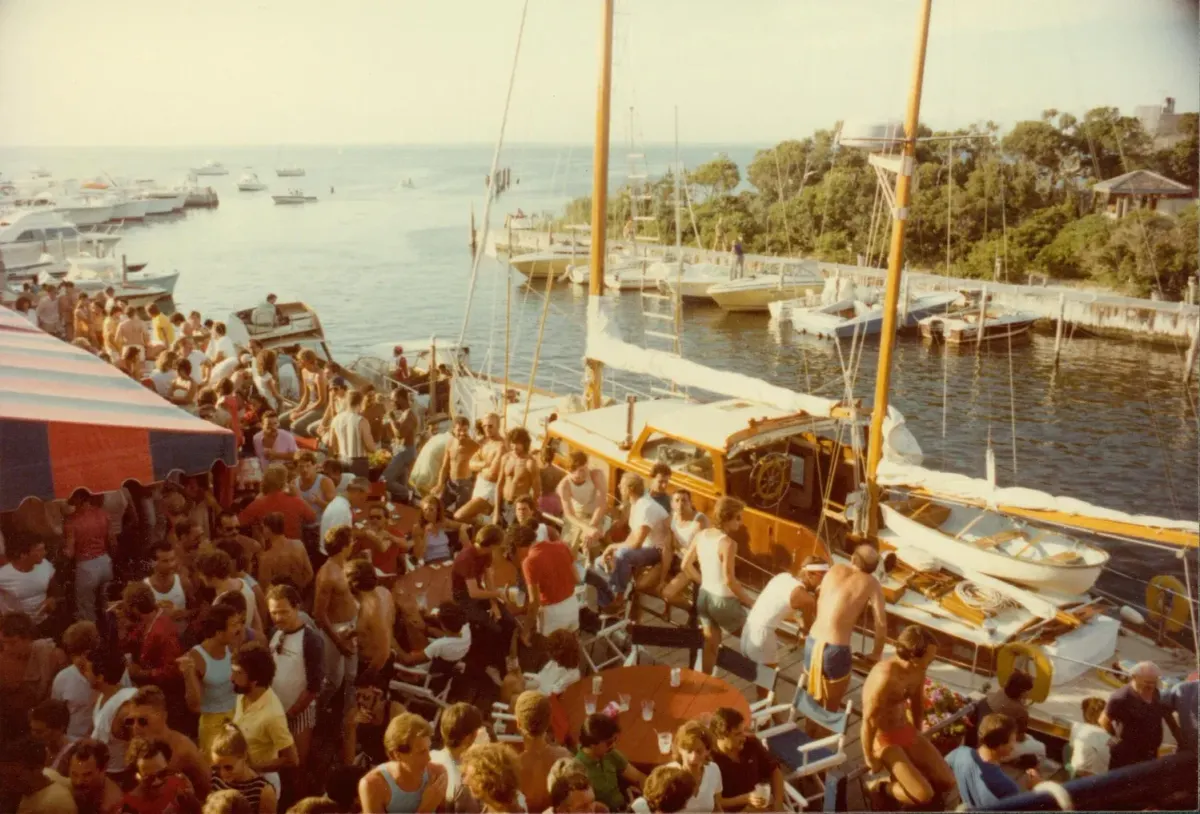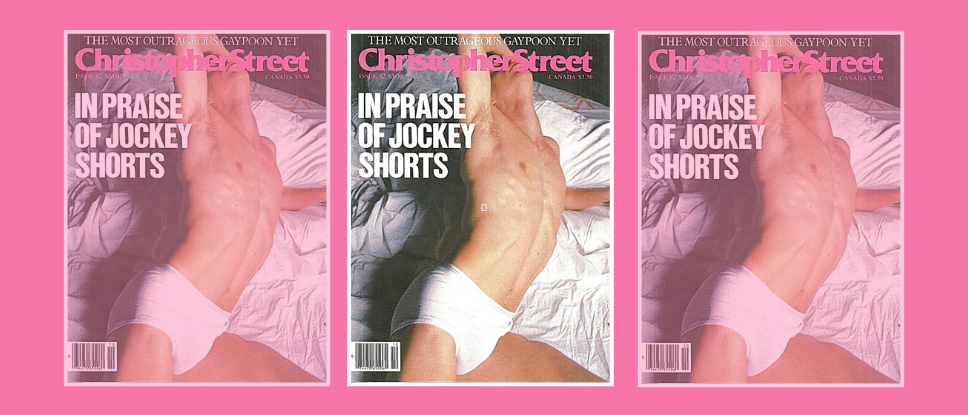
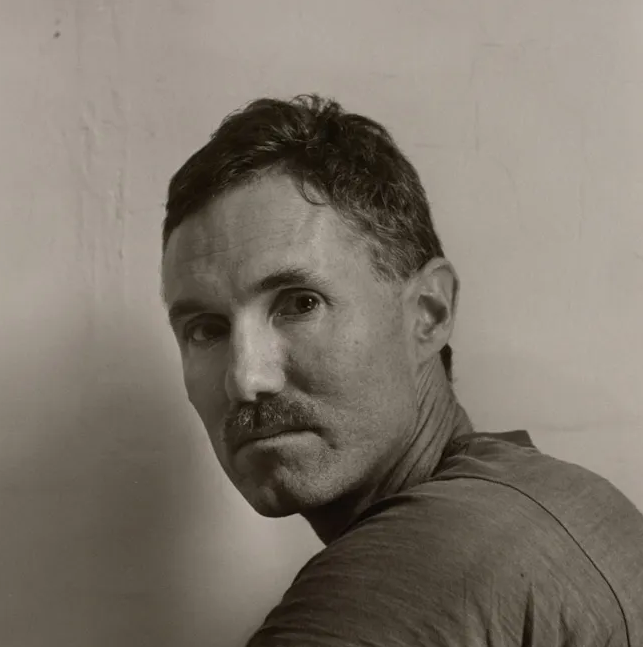
This article appeared in the March 1979 issue of Christopher Street.
THERE WAS DISCO EVERYWHERE in San Francisco: disco in the baths, so loud, so intoxicating, that for the first few hours I was unable even to think of sex and went to the end of the dark hallways to dance by myself, unseen, to Gloria Gaynor; disco on a radio as I swam laps at the Golden Gate “Y”; disco in the bars synchronized with closed-circuit TV so we could gawk at dancers moving to the song playing at that moment. There was even disco in the discotheque (though not nearly as good as the disco at the baths) and disco at the apartment of friends when we arrived for dinner—at which point, battered, nearly driven mad by disco, I slumped in my chair and inquired as politely as I could if we might not listen to something classical instead. “Of course!” my friend exclaimed. “I gave up playing classical music because it always made my guests feel they were supposed to be more dignified or something. But I love it!” So we spent the rest of the evening listening to Mozart masses before visiting the Black ’n Blue, where, alas, there was another tape playing. Enclosed in this uniform realm of disco, I felt I had hardly left Manhattan.
In Seattle the disco stopped, thank God, replaced by the delicate collision of raindrops, mist in the fir trees, islands in the bay, and, at dawn, the sun ruddy on the snowcapped mountains above the airfield. I stopped and wondered: should I live here? There was a time when I worried a great deal about what city I should be living in. Not tied down to a job, I was freer than most to choose my town, and one of the questions that intrigued me was, what city is best for a gay man? Even on this latest trip west, when I got to each place, I wanted to know right away: What’s it like here, being gay? Are the men better-looking, friendlier, less snobbish, more relaxed?
One day in Seattle was hardly enough time to take the tenor of the town, and part of my romantic impulse to settle down in each city I visited was simply the euphoria of the traveler to whom all new things look good. Part of it was due, also, to the monotony of my life in Manhattan—a monotony so severe I did not think I could walk certain blocks one more time, so familiar were each window, hydrant, parking lot, and canopy. And the moment I alighted out West and found that public friendliness that is absent in Manhattan (for surely it is the rudest of all cities), I was struck with the realization I have whenever I leave New York: it is just so much easier to live elsewhere.
Los Angeles was warm and green and garrulous; lying in my room at the Hollywood “Y” on Sunday morning I listened to the church bells ringing in the distance and breathed the long sigh that occurs after a sea change and headed for the beach at Santa Monica. San Francisco convinced me once again that sex is better there than in New York (they have time for it there, it does not compete with lunch and shopping); nor do you have to wait there till two in the morning to go dancing (the absurd trend that has made dancing in New York on weekends a pain in the ass). And when I got to Seattle, the dignity and decorum of the man I asked directions of on the street—standing there in his overcoat and hat on a hill whose treelined streets framed him like one in a novel by Booth Tarkington—were in marked contrast to the wasted anxiety of faces on the sidewalks of New York.
In fact, so convinced had I become, during my week away, that West Coast cities are friendlier, more sober, more dignified, and, finally, more civilized than New York, that when our cab finally emerged into Manhattan from the Queens-Midtown Tunnel, I was startled not to see rude crowds throwing bricks at each other on Second Avenue. The city seemed calm, there was hot and cold running water, no corpses in the street. Everything, in fact, seemed instantly familiar and dear to me. I was struck again by the human scale of the streets, and when I dropped in at my favorite dance bar, I knew exactly what it was that makes this city unlike any other. I remembered driving into town from Kennedy Airport one evening with a friend just back from Chicago, fervently discussing (for New York had been a hassle that day) the question that plagued me: was it not better elsewhere? “But New York,” I said, “is the only city . . .” “Stop,” he said, interrupting me. “New York is the only city.”
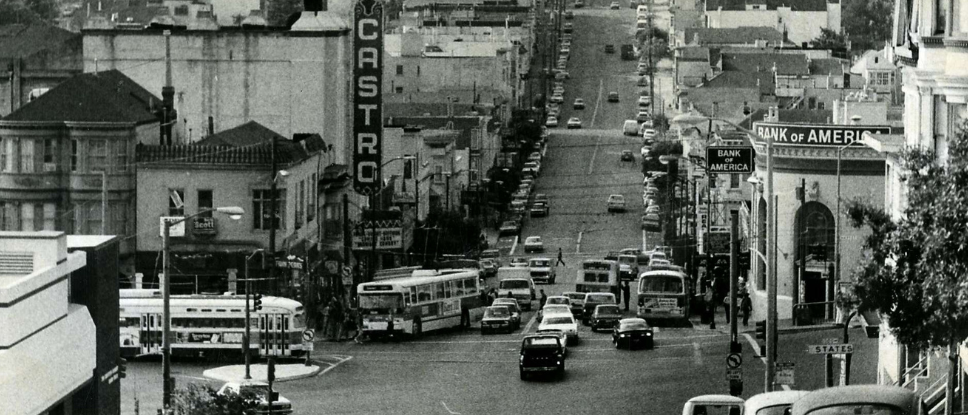
Well, of course it is not, by any means, but the conviction with which he said this—as an Englishman might say it of London, a Frenchman of Paris—illustrates New York’s peculiar pride in itself, a pride toward which we should be charitable. People advised me not to admit I was from New York City when I visited San Francisco, that it would only evoke hostility. I found the opposite to be true: San Franciscans enjoyed chortling over the differences between the two towns. Our differences intrigued us. Who of us does not have one friend, at least, adrift on that endless tide that washes gay men between New York and San Francisco (or half a dozen other cities)? Why do we envy the airline steward? That prototypical gay man, suspended in midair between, say, Christopher and Castro Streets, is surely this century’s version of the Flying Dutchman, condemned by his own romanticism to be unsatisfied in all cities, wanting them all to be exhilarating, all faces fresh, all loves new. In my younger days one of my dreams was to drive cross-country and visit every bathhouse along the way; now I realize that that would be pointless.
No, New York is not the only city, and friends of six and seven years are leaving it now for others (San Francisco, Atlanta, Portland) where, they hope, life will be better. We imagine perfect cities, cities in which it is best to live (Austin, Boston, Charleston?). But having freed myself (through mere age, no doubt) of this need to be living in the best city, I can appreciate the city I am in for its own peculiar virtues. An airline steward recently informed me that “the circuit” is everywhere: Los Angeles, Chicago, Omaha. What a nightmare! No one wants those three cities to offer the same experience, but in the age of disco perhaps they do.
What traveling at its best does for one is to help make distinctions, and when I returned to Manhattan after visiting the West I was struck—very happily—by New York’s being unlike any other. And I knew that if I were lucky the city would remain new, and strange, to me for about thirty-six hours. That was all the time I had. So I ran around gawking at the same streets and faces that had dejected me the day I departed, and, boy, were they attractive! The city was rare and exhilarating, but would I still love it tomorrow? You can make all the vows you want, but monotony, worry, dejection are like carbon monoxide: they kill the city while you’re just sitting there. The real crime is to allow it to become routine, or, worse, never to allow it even to become real, because one can always leave a city (or a lover) and go somewhere else. ❡
Andrew Holleran is the author of the celebrated novel Dancer from the Dance (1978) and, most recently, The Kingdom of Sand (2022). He wrote a regular column for Christopher Street from the late 1970s through the early 1990s. [Andrew Holleran on Wikipedia]